Tag: food

  • Running on Empty? Check Your Power Source

    I’ve been learning about off-grid power sources—specifically solar energy and how battery banks work. One thing really stood out to me: you can’t mix and match battery cells of different ages, brands, or capacities. A mismatched bank will only perform as well as its weakest cell. Using the cheapest or incorrect charger causes uneven loading, and poor connections can even destroy the entire system.

    Now… how does this relate to your health?

    Think about your last meal. How did it make you feel afterward—heavy, tired, and weighed down? Or light, energized, and ready to take on your day?

    Food is our power source.

    When we consistently choose the cheapest or fastest options instead of foods that truly nourish our bodies, we create disruption at the cellular level—especially in our mitochondria, where energy is produced. Over time, this can lead to low energy and a cascade of health issues, from diabetes and heart disease to depression and anxiety.

    So pause for a moment. Put a little thought and intention into what you’re using to fuel your body.

    👉 Eat real, whole foods.
    👉 Support your energy at the cellular level.
    👉 And don’t forget the water—hydration matters more than you think.

    Your body is your power system. Treat it like one.

  • 🌿 The Past Is in Your Head, the Future Is in Your Hands

    Hey all!

    As you may know (or maybe not 😊), I work out most mornings—or at the very least, I walk the dogs. It’s my way to get moving, get my blood flowing, and start the day with positive energy.

    During a workout the other day, Autumn Calabrese said something that really stuck with me:

    “The past is in your head, but the future is in your hands.”

    And then, right on the heels of that, she added:

    “What you aren’t changing, you are choosing.”

    BAM. Such truth, right? I literally said out loud, YES!

    I’m all about making positive changes and getting out of our own way. At the Institute for Integrative Nutrition, we learned that the past is just a present moment that has already happened, and the future is a present moment that hasn’t happened yet.

    I’ve always been a bit of a ruminator—a worrier. What if this? What if that? Lately, I’ve been working hard to stay grounded in the present. Honestly, it’s not easy! For me, it’s much harder than saying no to processed food and yes to foods that truly nourish your body, mind, and spirit (yep—had to throw that in there 😉 Eat real food. It supports every part of YOU).

    My goal right now is simple: pay attention and be thankful for what’s happening today.

    Just last week, I went out with my girls to celebrate my oldest’s birthday. We had sushi and matcha at this cute new spot in Covington, then grabbed gelato—so good! 🍣🍵🍨 Walking around, laughing, talking… just being together was such a gift.

    It reminded me: don’t wish these moments away by worrying about tomorrow or replaying yesterday.

    When I catch myself drifting into that negative headspace, I turn to meditation and breathwork—both powerful tools to bring your focus (and energy) back to the present.


    Want to Learn How to Stay Present & Create Positive Change?

    👉 DM me and let’s explore your next step toward healing.
    💬 Found this post helpful? Share it with someone you care about—it might be exactly what they need.
    📩 For regular tips, tools, and inspiration, subscribe at www.wildrootsvitality.com or email me at janice@wildrootsvitality.com.
    👋 Need personal guidance? I offer 1-on-1 coaching to help you create sustainable, science-based changes that truly stick.
    Book your free clarity call today at www.wildrootsvitality.com.

  • Tried Everything to Lose Weight? Here’s Why It Hasn’t Worked—And What Finally Did

    Have you tried every diet under the sun—keto, paleo, low-fat, low-carb, even the old advice of eating five small meals a day to boost your metabolism—and still can’t lose the weight?

    You’re not alone. I’ve been there too.

    When I followed the “eat every few hours” plan, I was constantly hungry, frustrated, and exhausted. I couldn’t figure out why the weight wouldn’t budge. I was eating “clean,” prepping meals like a pro, and doing everything right—or so I thought.

    Then I discovered intermittent fasting… and everything changed.

    I felt better almost immediately—cleaner, lighter, more in control. Plus, it cut down on constant meal prep. Total win-win! But the biggest benefit? I finally started losing weight. And it wasn’t just the scale—my energy improved, my cravings disappeared, and my mind felt clearer than ever.


    So What Makes Intermittent Fasting Work When Other Diets Don’t?

    It all comes down to insulin—your body’s fat storage hormone.

    Whenever we eat, especially carbohydrates or sugar, insulin levels rise. Your body uses some of that sugar for immediate energy, stores a bit in your liver and muscles as glycogen (which have limited capacity), and converts the rest to fat for long-term storage.

    Here’s a great analogy from Dr. Jason Fung: Think of your glycogen stores as your refrigerator and your body fat as a basement deep freezer. If you keep restocking the fridge all day (aka eating constantly), your body never taps into the freezer (aka your fat stores). So fat just keeps piling up.


    The Hidden Insulin Triggers Sabotaging Your Weight Loss

    It’s not just sugary treats causing insulin spikes. Even things you think are healthy—like fruit juice, “diet” soda, sports drinks, and flavored coffee—can trigger an insulin response, pushing your body to store more fat.

    Yes, even zero-calorie sweeteners can send the same signal to your brain and body: “Store fat now.”

    We’ve been misled. Big Food marketed low-fat, high-carb, and “sugar-free” as healthy alternatives, but the truth is, we’ve been stuck in fat-storage mode for decades—and it shows.


    Are You a Sugar Burner or a Fat Burner?

    Most people operate in sugar-burning mode all day. This constant grazing and snacking keeps insulin elevated, which means your body never accesses fat for fuel.

    Even worse, it halts your body’s natural cleanup process—called autophagy—which is essential for cellular repair and longevity.

    Meanwhile, excess sugar intake is overloading our livers, leading to a rise in non-alcoholic fatty liver disease, even in kids and teens. That’s right—sugar, not fat, is the real culprit.


    The Truth About Belly Fat and Cravings

    Certain calories—especially from processed carbs and sugary drinks—make your fat cells hungrier, especially the dangerous visceral fat around your belly. This belly fat isn’t just stubborn—it’s biologically active. It sends signals to your brain that drive cravings, leading you to overeat… the wrong kinds of food.

    That’s why willpower alone won’t fix it. You have to change the system.


    Final Thoughts

    If you feel like you’ve “tried everything,” it’s not your fault. The weight loss industry has fed us decades of bad advice. But now you know the truth: It’s not just about how much you eat—it’s about how often and what you eat.

    Intermittent fasting helps reset your metabolism, lower insulin levels, reduce inflammation, and finally unlock your fat stores for energy.

    Feeling better, losing weight, fewer cravings, and less time in the kitchen? That’s not a fad—that’s freedom.


    💬 Found this helpful or eye-opening?

    Please share this post with someone you care about—it might be the missing piece they’ve been searching for.

    📩 Want tips, tools, and inspiration delivered straight to your inbox?
    Message me at janice@wildrootsvitality.com or visit my website http://www.wildrootsvitality.com. Watch for my free guide coming soon “Kickstart Your Fat-Burning Journey with Intermittent Fasting.”

    👋 Need personal guidance?
    I offer 1-on-1 coaching to help you implement sustainable, science-based strategies to reach your health goals. Visit my website to learn more. http://www.wildrootsvitality.com

    Let’s ditch the diet noise and finally get results that last.

  • Unlocking Health Through Epigenetics: Small Changes, Big Impact—for You and Your Dog


    Curious About Epigenetics?

    For years, we believed our genes were our destiny—determining whether we’d be overweight or thin, healthy or sick. But science now tells a different story. Genes are only part of the equation. What we eat, how we move, how we sleep—these daily choices influence which genes are turned on or off.

    That means we have far more control over our health than we were led to believe.

    Food is a tool.
    Sleep is a tool.
    Movement, breath, connection—all powerful tools.

    They speak directly to our biology, influencing our gene expression, interacting with our mitochondria, and shaping our energy and vitality. These choices are either building us up—or breaking us down.

    Do you feel energized and alive, or constantly drained and dragging through your days?

    Let’s use every tool in our toolbox to prevent disease and create a vibrant, fulfilling life—instead of waiting for symptoms and trying to manage them with a pill. The choices we make today are the gateway to our future.

    Choose the ones that bring your body back into balance.
    That’s what it craves—homeostasis.


    And don’t forget your furry family members…

    The same principles apply to our pets. That highly processed industrial food many dogs and cats are eating? It’s contributing to cancer, skin issues, digestive problems, and shorter lifespans.

    Here’s the good news: you don’t need to overhaul everything.
    Even changing just 10% of your pet’s food—like their treats or meal toppers—can make a noticeable difference.

    Try sharing fresh, whole foods like:

    • Blueberries
    • Chopped apples
    • Fresh cilantro

    Just be careful—never feed your dog the following foods:

    • Onions
    • Grapes & raisins
    • Chocolate
    • Nutmeg
    • Chives
    • Macadamia nuts

    My favorite healthy treats to share with my pups? Check out for healthy homemade treats crafted with love!  My dogs absolutely love them!  https://thepawstrychef.com

    I’d love to hear yours too! Let’s keep our entire family—two-legged and four-legged—on the path to wellness.💚

  • Gut Health Gone Wild: Lessons from the Road

    Gut Health Gone Wild: Lessons from the Road

    Hey friends!

    Last week, my girls and I had the best vacation. We took a road trip to Niagara Falls and spent a few days exploring both the beautiful U.S. side and venturing into Canada. Believe it or not, this was my first time traveling out of the country—and it definitely won’t be my last! The falls were stunning from both sides.

    One of the highlights was the Maid of the Mist tour. Feeling the raw power of the falls up close was incredible—absolutely worth getting soaked! Thank goodness for the ponchos! The Canadian side felt a bit commercialized for my taste, but the girls loved it. And I have to say, the ice cream from Sweet Jesus might have been the best I’ve ever had. (Even though my stomach wasn’t thrilled afterward… I’m just not used to that much sugar and dairy anymore!)

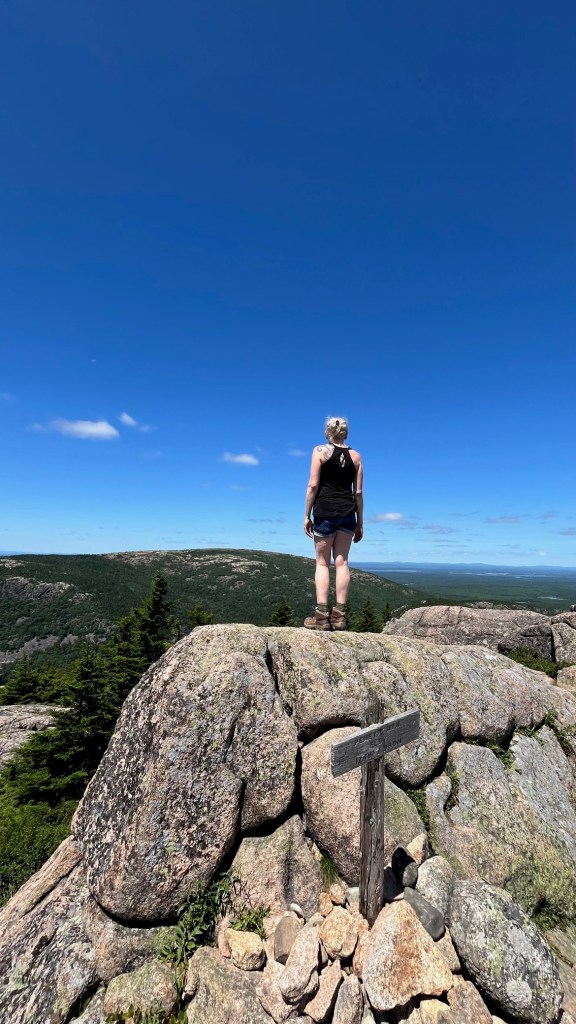
    Then we ventured up to Acadia National Park—so beautiful! One day, we hiked up a mountain over rock scrambles… it was steep but the views from the top were absolutely worth it. The trip down was just as epic—more scrambling and even some ladders into a ravine. So cool! 🔥

    We actually started the trip off strong, food-wise. I packed healthy travel snacks—nuts, grass-fed meat sticks, crunchy veggies, Applegate lunch meat, cheese, and Simple Mills crackers. We even brought food to cook over the campfire like burgers and shrimp—so good!

    As the week went on, we ate out more, which was fine—we tried to stick to less-processed, more home-style meals. But let’s be honest: there was ice cream… and s’mores… and then came the 16-hour drive home. That’s where it all went downhill. We hit a fast-food place late in the drive, and I ordered a burger, fries, and a Frosty. Yikes.

    The next day, I felt awful—fatigued, foggy, bloated, and just off. I’m normally up early and working out before the day starts, but instead, I went back to bed. My energy was zapped.

    Here’s the deal: ultra-processed foods are typically loaded with sugar, which feeds the bad bacteria in your gut and disrupts your microbiome. That imbalance can lead to inflammation throughout your body—including your brain. Many of these foods also contain refined grains that rapidly convert to sugar, compounding the problem. Add in the genetically modified corn and wheat (which are often sprayed with glyphosate, a pesticide originally developed as an antibiotic), and your gut flora takes a major hit.

    This isn’t how I normally feel—and that’s why I’m so grateful for my usual clean, whole-foods lifestyle. Today, I’m back to basics: clean water, no gluten or added sugar, minimal dairy, and lots of gut-loving nourishment. It makes such a difference.

    Processed food and excessive sugar don’t just mess with digestion—they can cause fatigue, depression, aches and pains, brain fog, poor sleep, and more. No thank you!

    Next vacation, I’ll still enjoy a few local treats—I’m all about balance, not deprivation—but in moderation. I want to keep traveling, trying new things, and living fully for the next 50 years! And to do that, I need to fuel my body in a way that supports my health and vitality.

    Nourishment is the highest form of self-care. Give your body—and your gut—a chance to thrive. Choose real, whole foods over processed ones. You’ll feel the difference. And when you feel better, you’ll naturally want to make other healthy lifestyle changes too. You can feel strong, vibrant, and full of energy—at any age.

  • “The Hidden Struggles of Dining Out Gluten-Free—and How We Can Make a Difference”

    “The Hidden Struggles of Dining Out Gluten-Free—and How We Can Make a Difference”

    Why Is Eating Out So Hard When You’re Gluten-Free?

    Last Saturday was a special day—my daughter’s graduation party! It was filled with love, laughter, and meaningful conversations. One of those conversations really stuck with me.

    As we chatted with family (yes, even though I’m no longer married to her dad, I still consider his family an extension of mine 😊), the topic of gluten sensitivities, celiac disease, and even food dyes came up. It’s something I’ve had personal experience with—both my daughter and I have eliminated most gluten from our diets due to health concerns, and the difference has been noticeable.

    For me, avoiding gluten hasn’t felt overly difficult. I enjoy cooking and baking from scratch, and I’m not someone who eats out often. But during our conversation, it hit me—for people who are more social, who love dinners out and catching up with friends over a meal, navigating food sensitivities can be incredibly challenging.

    And honestly, that got me thinking: why does it have to be so hard?

    There are so many people dealing with food sensitivities—not just to gluten, but also artificial dyes, MSG, excess sugar, and high-fructose corn syrup, which are rampant in most restaurant foods. Shouldn’t we be able to go out and enjoy a meal without fearing a reaction or spending the night feeling awful?

    So, I’m Taking Action.

    I’m starting a mission to find and support local restaurants that are gluten-free friendly and celiac-aware. Not big chains—but smaller, community-focused places that might actually listen and care.

    Over the next few months, I’ll be reaching out to restaurant owners and managers, sharing what I’ve learned, and asking if they’re open to adding more inclusive, allergen-aware options to their menus. I’ll share what I find here on the blog.

    And Here’s Where You Come In…

    Let’s start a movement—because change starts with us.
    If you or someone you love has struggled with food sensitivities, don’t stay silent. Speak up at your favorite local restaurants. Ask questions. Share your needs. Encourage them to consider healthier, safer options.

    🌱 When more of us raise our voices, we create momentum—and that’s how real change happens.

    Please share this post with friends and loved ones who care about wellness, real food, and safe dining experiences. If you know of a great gluten-free spot, please share it with me—I’d love to highlight them!

    ✨ Follow along for updates as I connect with local restaurants, share tips, and post progress.
    My full website is coming soon—and I can’t wait to grow this community with you.