Tag: mental-health

  • Going Tiny to Live Bigger

    Going Tiny to Live Bigger

    Ever thought about going tiny?
    Tiny homes, I mean 😊

    Lately, I’ve been pivoting—not just in my health journey, but in my life journey. And that’s led me to rethink my living situation in a big way… by going small.

    I’m choosing a simpler, more minimalist lifestyle so I can reclaim something priceless: time, energy, and peace of mind.

    One of my biggest goals is to reduce the hours I spend cleaning, organizing, and managing a home that no longer supports the life I want to live. I want more time outdoors. More hikes. More national parks. More fresh air. And honestly? Less stress.

    Goal number two: stop bleeding money on things I don’t even use.

    I currently live in a lake community with a pool, beach, golf course, playgrounds—you name it. Sounds dreamy, right? Except I don’t use any of it. And the POA dues required to maintain all those amenities add up to the equivalent of a couple extra mortgage payments every single year. That’s a serious money drain for a lifestyle that no longer fits.

    On top of that, the community has become overcrowded and no longer feels like the peaceful, park-like setting it was when we moved there 20 years ago.

    This next chapter looks different—and it feels right.

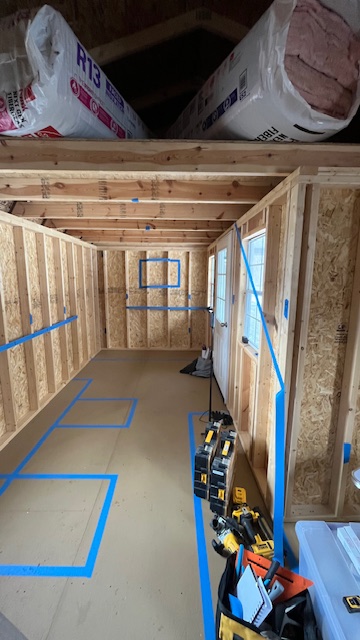
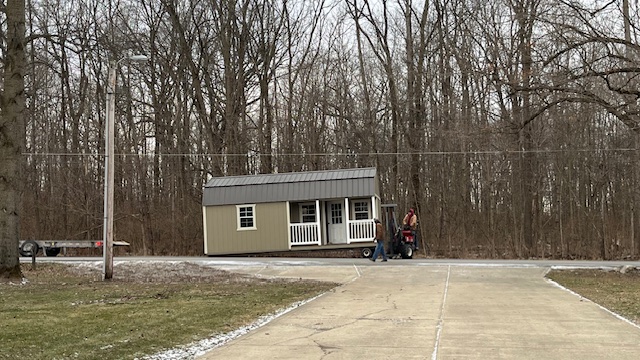
    I’ve been incredibly fortunate to meet someone amazing who’s helping me design and build a tiny home that works for real life: a cozy, welcoming space for me and my dogs, and a place my daughters will actually enjoy coming home to and spending time in.

    After starting over more than once, and going through divorce, I truly believed retirement might never be possible for me. But now— with my youngest off to college and my oldest mostly out of the house—I’m downsizing in a major way. Not just my home… but my life.

    I’m letting go of the things that stand in the way of living my best life so I can finally pursue my dreams.

    Because here’s the truth: it’s never too late.

    I recently heard a quote that stopped me in my tracks:
    “I want to be rich in people and experiences—not in material things.”

    Yes. That.

    I want to wander… and wonder.
    I want to live my life—not live in a cubicle.
    I love nature. I love light. I love fresh air.

    And it’s just not natural for me to spend eight hours a day closed in behind a computer with no sunlight.

    Going tiny isn’t about having less—it’s about making room for more of what actually matters.

    And this next chapter?
    It’s already feeling lighter. 🌿

    This is just the beginning.

    If you’re curious about tiny living, simplifying your life, or what it really looks like to design a home—and a lifestyle—that supports your health and happiness, I’d love for you to follow along my journey.

    I’ll be sharing progress, details, and plenty of photos as this tiny home comes to life.

    Curious to learn more? Stay tuned… there’s so much more to come. 🌿
  • Creating Space for Growth Starts with What You Let Go

    Direct your energy toward who you want to become—not who you think you are right now.

    There’s a higher version of you waiting. Growth may feel uncomfortable at times, but that’s usually a sign you’re moving in the right direction.

    Feeling burned out before the day even starts? Try filling your cup first.
    And no… I don’t mean coffee (even though it’s tempting ☕).

    Start your morning with something just for you:

    • Visualize how you want your day to flow
    • Stretch to wake up your body
    • Try rebounding to boost energy
    • Practice meditation or breathwork
    • Write down every thought that pops up first thing in the morning

    Then pause. Challenge the thoughts that keep you stuck, and lean into the ones that move you forward.

    You can’t make progress while staying in your comfort zone.
    And staying “humble” sometimes just keeps us quiet when it’s time to grow.

    Want to try something new? Make a to-DON’T list instead of a to-do list.

    Ask yourself:
    What can I remove to make room for who I want to be—and how I want to show up?

    Negativity.
    Doom scrolling.
    Alcohol.
    Ultra-processed foods.
    Clutter.

    Less of what drains you.
    More of what energizes you.

    ✨ If this resonates, start with just one small shift this week—and notice how it changes your energy.
    And if you’d like support creating habits that actually stick, you know where to find me.

  • Stop Feeding the Sugar Burner & Unlock Your Fat-Burning Superpower

    Remember our ancestors—the cave dwellers?
    Where would we be if they hadn’t discovered fire? Probably toast. Or…not even toast, because toast didn’t exist yet. Either way—not ideal.

    The point is: progress only happens when we stop clinging to old habits. Your health works the same way. To grow, you’ve got to try new things and release what’s holding you back—including what you eat and drink.

    Ask yourself: Do you feel energized after a meal?
    And no, I don’t mean that buzzy, jittery “boost” from sugar or refined carbs like bread, pasta, and pastries. That’s a trap—a quick high, quick crash, and a whole lineup of problems you don’t need.

    According to nutrition expert JJ Virgin, too much sugar can lead to cravings, weight gain, fatigue, bloating, poor gut health, and an increased risk of chronic conditions like heart disease and metabolic syndrome. Sugar overload can also throw off your hormones—messing with satiety, fueling acne, and wreaking havoc on your mood and sleep.
    (So if you’re wondering why you feel blah…hello, sugar.)

    Does giving these foods up feel dramatic? Like life might not be worth living without them? Trust me—I get it. But here’s the secret: food actually tastes BETTER once you reset your sweet tooth. Your taste buds wake up again.

    Give it 30 days.
    That’s all it takes to reset your system. You’ll start feeling changes around day 10, but by day 30 you’ll be thinking, “Why didn’t I do this sooner?”
    I dare you to prove me wrong.

    You’ll feel better. Look better. Sleep better. Think clearer. You’ll basically upgrade to the deluxe human version of yourself.

    When I first ditched my morning toast…my Friday Mountain Dew…my “pasta counts as a meal, right?” habit—it was tough. Your body craves these things because they give a quick dopamine hit. But once your system resets, you stop needing them just to feel okay.

    Same goes for alcohol.
    You might think you’re fine, but you have no idea how good you can really feel until your body gets a break. Your body is a powerhouse—it wants to heal. Remove the junk, add the good, and let it do what it was designed to do.

    Soon you’ll notice you’re smiling more…snapping less…maybe even letting that person who cut you off in traffic survive the day, lol.

    And here’s another truth bomb:
    Your body has two main fuel systems—fat burner and sugar burner.
    If you snack all day or constantly sip sweet drinks, you’re feeding the sugar-burning system nonstop. Which means…

    You never dip into your fat stores. Not even a little.

    To activate the fat-burning system, your body needs breaks from food—sweet drinks included. The easiest time to do this? While you sleep. Try finishing your last meal 2–3 hours before bed and waiting 8–12 hours before eating again.

    And despite the old saying, breakfast isn’t automatically the most important meal of the day. What is important is listening to your body. Sometimes it needs nourishment…and sometimes it needs a rest.

    Refined carbs also spike insulin, which signals your body to store fat. Your muscles and cells can only hold so much. When they’re full, the overflow gets pushed into fat cells—your body’s way of protecting your organs from excess sugar.

    As Dr. Jason Fung says:
    “When your fridge gets full, you move food to the deep freezer.”
    But when you’re hungry…which one do you raid first?

    Exactly.


    Ready for the next step?

    If you’re curious, overwhelmed, or ready for guidance on cutting sugar, balancing insulin, or resetting your body’s fuel system, I’ve got your back.

    📩 Email me: janice@wildrootsvitality.com
    🌿 Visit my website: Wild Roots Vitality
    💬 Or schedule a free consultation—let’s create the healthier, happier version of you together.

  • 🌙 Sleep: The Unsung Cornerstone of Health

    Dr. Rubin Naiman, a leading expert on sleep and dreams, calls sleep one of the four cornerstones of health—right up there with nutrition, movement, and emotional wellbeing. And he’s absolutely right.

    What many people don’t realize is how deeply connected our sleep and eating habits are.
    What and when we eat affects how we sleep — and how we sleep affects what we crave and how our metabolism functions.

    Think about the last time you slept poorly…
    Were you more likely to grab a donut or a slice of pizza instead of something nourishing? 🍕🍦
    I know I am! When I’m overtired, my willpower takes a nap of its own, and suddenly all I want is carbs and sugar.

    Here’s the truth:
    We’ve become a rest-less society. We confuse distraction with rest — things like binge-watching shows, scrolling, drinking, or using other substances to “unwind.” But these aren’t true rest. In fact, they often make it harder to get the restorative sleep our bodies crave.

    Sleep issues like sleep apnea are more common than ever and, like other chronic conditions (think diabetes or heart disease), they can often be improved — even reversed — through lifestyle changes:
    🌿 Eating nutrient-dense, anti-inflammatory foods
    🏃 Getting regular movement
    🚫 Reducing toxins and inflammation

    And let’s talk about a few common sleep saboteurs:

    Caffeine – Even if you can fall asleep after that late-day coffee, it doesn’t mean it’s not disrupting your sleep quality later in the night.

    🍷 Alcohol – A double agent. It may help you fall asleep initially, but it tends to wake you up in the middle of the night and throws off your circadian rhythm.

    🌾 Gluten sensitivity – For those who are sensitive, gluten can cause fatigue during the day and restless nights. Pay attention to how your body feels after meals—it might be trying to tell you something.

    The takeaway?
    Rest isn’t a luxury — it’s a biological necessity. Quality sleep is one of the most powerful ways to restore balance, regulate appetite, and support overall vitality.


    💤 Ready to Sleep Better, Feel Better, and Live More Fully?
    Let’s talk! I help clients uncover simple lifestyle shifts that support deep, restorative sleep — naturally.
    👉 Visit www.wildrootsvitality.com or DM me on Instagram @WildRootsVitality to start your journey.
    💬 Found this post helpful? Share it with someone you care about—it might be exactly what they need.
    📩 For regular tips, tools, and inspiration, subscribe at www.wildrootsvitality.com or email me at janice@wildrootsvitality.com.
    👋 Need personal guidance? I offer 1-on-1 coaching to help you create sustainable, science-based changes that truly stick.
    Book your free clarity call today at www.wildrootsvitality.com.

  • 🌿 The Past Is in Your Head, the Future Is in Your Hands

    Hey all!

    As you may know (or maybe not 😊), I work out most mornings—or at the very least, I walk the dogs. It’s my way to get moving, get my blood flowing, and start the day with positive energy.

    During a workout the other day, Autumn Calabrese said something that really stuck with me:

    “The past is in your head, but the future is in your hands.”

    And then, right on the heels of that, she added:

    “What you aren’t changing, you are choosing.”

    BAM. Such truth, right? I literally said out loud, YES!

    I’m all about making positive changes and getting out of our own way. At the Institute for Integrative Nutrition, we learned that the past is just a present moment that has already happened, and the future is a present moment that hasn’t happened yet.

    I’ve always been a bit of a ruminator—a worrier. What if this? What if that? Lately, I’ve been working hard to stay grounded in the present. Honestly, it’s not easy! For me, it’s much harder than saying no to processed food and yes to foods that truly nourish your body, mind, and spirit (yep—had to throw that in there 😉 Eat real food. It supports every part of YOU).

    My goal right now is simple: pay attention and be thankful for what’s happening today.

    Just last week, I went out with my girls to celebrate my oldest’s birthday. We had sushi and matcha at this cute new spot in Covington, then grabbed gelato—so good! 🍣🍵🍨 Walking around, laughing, talking… just being together was such a gift.

    It reminded me: don’t wish these moments away by worrying about tomorrow or replaying yesterday.

    When I catch myself drifting into that negative headspace, I turn to meditation and breathwork—both powerful tools to bring your focus (and energy) back to the present.


    Want to Learn How to Stay Present & Create Positive Change?

    👉 DM me and let’s explore your next step toward healing.
    💬 Found this post helpful? Share it with someone you care about—it might be exactly what they need.
    📩 For regular tips, tools, and inspiration, subscribe at www.wildrootsvitality.com or email me at janice@wildrootsvitality.com.
    👋 Need personal guidance? I offer 1-on-1 coaching to help you create sustainable, science-based changes that truly stick.
    Book your free clarity call today at www.wildrootsvitality.com.

  • “Why Stress Might Be More Dangerous Than Sugar”

    I’ve always been fascinated by nutrition and how what we eat impacts every single system in the body. Food and water truly are the building blocks of your cells, muscles—your entire being.

    But one of the most eye-opening things I discovered while studying integrative nutrition is this: your thoughts and stress levels can affect your health just as much, if not more, than what’s on your plate.

    Think about it…

    • The placebo effect is real.
    • So is the nocebo effect.
    • What you believe—and how stressed you are—directly influences your body’s ability to heal.

    The reality is, today’s world bombards us with stress in ways past generations never faced. Work demands, constant notifications, the endless scroll of social media, and a flood of negativity at every turn—it’s no wonder so many of us feel anxious, tired, and stuck.

    But here’s the empowering part: we get to choose how we respond.

    We can create practices to calm the stress response and shift our energy:
    ✨ Meditation
    ✨ Breathwork
    ✨ Quality time with family and community
    ✨ Saying no when our bodies are asking us to

    Every single day, you have the opportunity to make choices that either support your healing—or keep you stuck.

    So let me ask you…

    • What do you truly need in order to heal?
    • What do you need to say “no” to?
    • And most importantly—are you willing to listen to your body and take action?

    Because here’s the truth: staying in the same rut leads to the same results. A few more pounds every year. A few more aches and pains. More medications. More doctor visits.

    But when you shift your thoughts, your habits, and your daily choices—you shift your life.

    💡 Ready to discover simple, powerful ways to bring more positivity and resilience into your days?
    👉 DM me and let’s explore your next step toward healing.

    💬 Found this helpful or eye-opening?

    Please share this post with someone you care about—it might be the missing piece they’ve been searching for.

    📩 Want tips, tools, and inspiration delivered straight to your inbox?
    Message me at janice@wildrootsvitality.com or visit my website http://www.wildrootsvitality.com.

    👋 Need personal guidance?
    I offer 1-on-1 coaching to help you implement sustainable, science-based strategies to reach your health goals. 👉 Book a free clarity call this week. Visit my website to learn more. http://www.wildrootsvitality.com

  • Stop Masking the Symptoms: Get to the Root for Real Health

    Have you ever walked into a room and thought, “Whoa—what is that smell?”
    Your first instinct is probably to find out where it’s coming from. Maybe you open a window, spray some air freshener, or light a candle to cover it up. But if you don’t actually find the source—maybe a leftover meal, a leaky garbage bag, or something even deeper in the walls—the smell doesn’t go away. It lingers. No matter how many air fresheners you add, you’re just masking the issue, not solving it.

    Now think about how often we do the same thing with our bodies and minds.

    We feel tired, anxious, bloated, foggy, irritable, or just “off,” and our first reaction is often to reach for something to fix it fast. A pill. More caffeine. A crash diet. Another scroll through social media to distract us from the discomfort. These may offer temporary relief, but they don’t address what’s really going on underneath.

    And sometimes, those quick fixes come with side effects—new symptoms or complications that leave us feeling even worse. What began as a simple attempt to feel better turns into a cycle of chasing symptoms while the root cause continues to grow.

    The truth is: your symptoms are not the enemy. They’re signals. They’re your body and mind trying to get your attention.

    From a Social, Emotional, and Intellectual (SEI) perspective, this matters deeply.

    • Socially, our health habits are shaped by the people around us. If everyone’s normalizing burnout, poor sleep, or surviving on takeout and stress, we start to think it’s normal too.
    • Emotionally, we may carry unprocessed stress, trauma, or self-worth struggles that show up in our physical health—through inflammation, digestive issues, fatigue, or mood swings.
    • Intellectually, we owe it to ourselves to question the surface-level solutions we’ve been sold. True wellness requires us to think critically, get curious, and take responsibility for exploring what our body truly needs.

    Does this mean medications are always bad? Of course not. Medications can be life-saving, especially in acute illness, injury, or infections. But when we rely on prescriptions alone for chronic issues—without also examining lifestyle, nutrition, stress, movement, sleep, and emotional well-being—we often miss the opportunity for true, lasting healing.

    The good news? There is another way.
    Making intentional, sustainable changes to how you eat, move, think, feel, and connect can help you find and address the root causes of what’s holding you back. And when you start healing from the inside out, everything shifts. Energy improves. Mood stabilizes. Digestion calms. Sleep deepens. Life starts to feel lighter—and more aligned.

    You don’t need another temporary fix.
    You need support, awareness, and the tools to go deeper.

    Because the root is where the healing begins.

    💬 Found this helpful or eye-opening?

    Please share this post with someone you care about—it might be the missing piece they’ve been searching for.

    📩 Want tips, tools, and inspiration delivered straight to your inbox?
    Message me at janice@wildrootsvitality.com or visit my website http://www.wildrootsvitality.com.

    👋 Need personal guidance?
    I offer 1-on-1 coaching to help you implement sustainable, science-based strategies to reach your health goals. Visit my website to learn more. http://www.wildrootsvitality.com

  • Information vs Transformation: Create the Health You Deserve

    Information is Useless…Unless You Use It

    We have access to more information than ever before—literally at our fingertips. Just ask Google! But here’s the truth: information alone changes nothing. It’s what we do with it that actually moves the needle.

    So… why is it so hard?

    We get stuck in old habits. They’re familiar, comfortable, and automatic—even when we know they aren’t serving us. Even when we know they’re making us feel sluggish, unwell, or contributing to chronic health issues. Knowing we need to change is not the same as actually changing.

    Why?
    Because change is hard.
    Holding the status quo is easy.

    So what do we do about it?


    All or Nothing… or Baby Steps?

    Are you someone who needs to dive in headfirst? Or are you more of a baby-steps, one-thing-at-a-time kind of person?

    There’s no one-size-fits-all approach to transformation—and that’s okay. Me? I’m an all-or-nothing kind of girl. Baby steps don’t work for me. I tend to fall back into old patterns when I try to “ease in.”

    Take my old nightly glass of wine. For a long time, I tried cutting back—telling myself I’d only have it on weekends or just one or two nights a week. And I did okay…for a while. But then a stressful day at work would hit and I’d say, “F!@* it”—and the pattern would repeat.

    What finally worked? Making a big, decisive change.
    When I stopped giving myself the option altogether, something surprising happened: the mental chatter stopped too. I was no longer constantly negotiating with myself. And that gave me freedom.

    It might sound small, but tune into your own internal dialogue—how much time and energy is it draining, just debating with yourself about the changes you want to make?


    Small Changes, Big Results

    Now, if you’re a baby-steps kind of person—don’t worry. That method isjust as valid, and often more sustainable for many people. Small, consistent changes over time can lead to massive transformation. The key is tostart—and to keep going.

    Ask yourself:

    • How do you want to feel each day?
    • How do you want to show up in your body?
    • What kind of life do you want to live—today and in the future?

    Then get honest:
    What needs to go in order to create that version of your life?
    And what healthy habit can you add into help crowd out the old ones?

    Start there. Start today. Don’t wait for the “perfect” time—there’s no such thing.
    Your body, mind, and spirit are ready for the shift, and they will thank you.

  • Finding My Flow: Reclaiming Energy and Embracing Sustainability

    Feeling Like Myself Again – Mind Clear, Body Energized

    It’s Friday—five days since getting home from vacation—and I’m finally starting to feel like my calm, energetic self again. It took this long to truly regain my composure, balance my sleep, and restore my energy levels. The brain fog has lifted, and I feel clear-headed and ready to tackle the day!

    It’s amazing how the body works. If you notice feeling “off” a day—or even two or three—after eating something, don’t ignore it. Maybe you’re achy, unusually tired, mentally foggy, or breaking out. These are often subtle signs that your body is reacting to something in your food. It’s not always immediate like an allergy. Sometimes, sensitivities take a little longer to show up.

    Your body is smart. It’s always trying to tell you something. Tune in. Be intuitive. Make small changes—even micro-adjustments—toward a better, smarter, healthier you.

    This weekend, I’ve got a few things on my agenda:

    • Visiting the farmers market to find new partners in my health journey
    • Laying new floors in the basement
    • Replacing baseboards in the bedrooms
    • Prepping the house to go on the market

    Alongside my wellness journey, I’m also on a mission to live a simpler, more sustainable life. That means downsizing and intentionally surrounding myself with things that bring peace. One fun step I took this week? I started a worm composting bin! Have you ever tried that? I’d love any tips, ideas, or sustainable living hacks you’ve discovered.

    Peace

    More updates to come soon 😊
    Wishing you a wonderful, grounded da

  • Gut Health Gone Wild: Lessons from the Road

    Gut Health Gone Wild: Lessons from the Road

    Hey friends!

    Last week, my girls and I had the best vacation. We took a road trip to Niagara Falls and spent a few days exploring both the beautiful U.S. side and venturing into Canada. Believe it or not, this was my first time traveling out of the country—and it definitely won’t be my last! The falls were stunning from both sides.

    One of the highlights was the Maid of the Mist tour. Feeling the raw power of the falls up close was incredible—absolutely worth getting soaked! Thank goodness for the ponchos! The Canadian side felt a bit commercialized for my taste, but the girls loved it. And I have to say, the ice cream from Sweet Jesus might have been the best I’ve ever had. (Even though my stomach wasn’t thrilled afterward… I’m just not used to that much sugar and dairy anymore!)

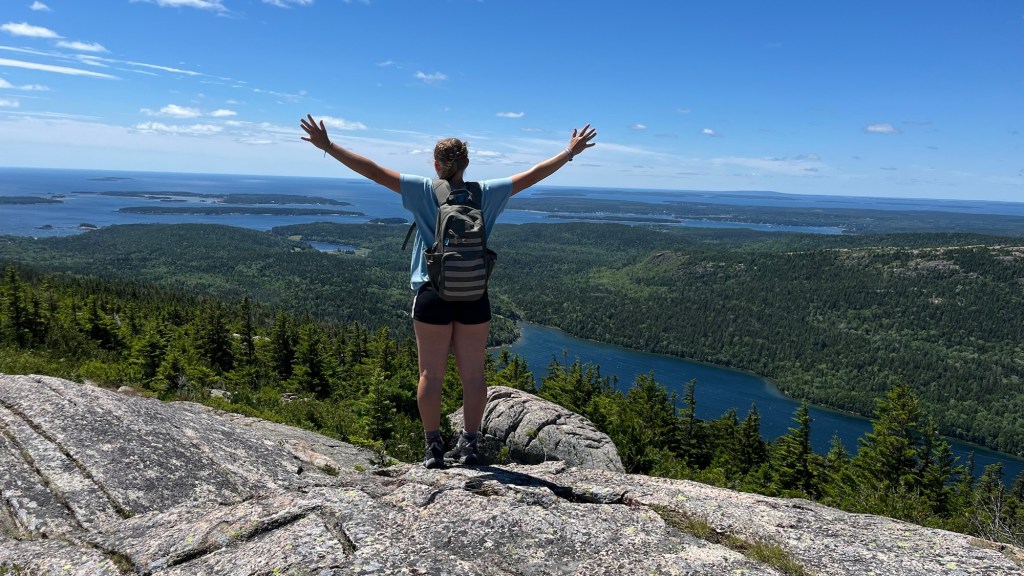
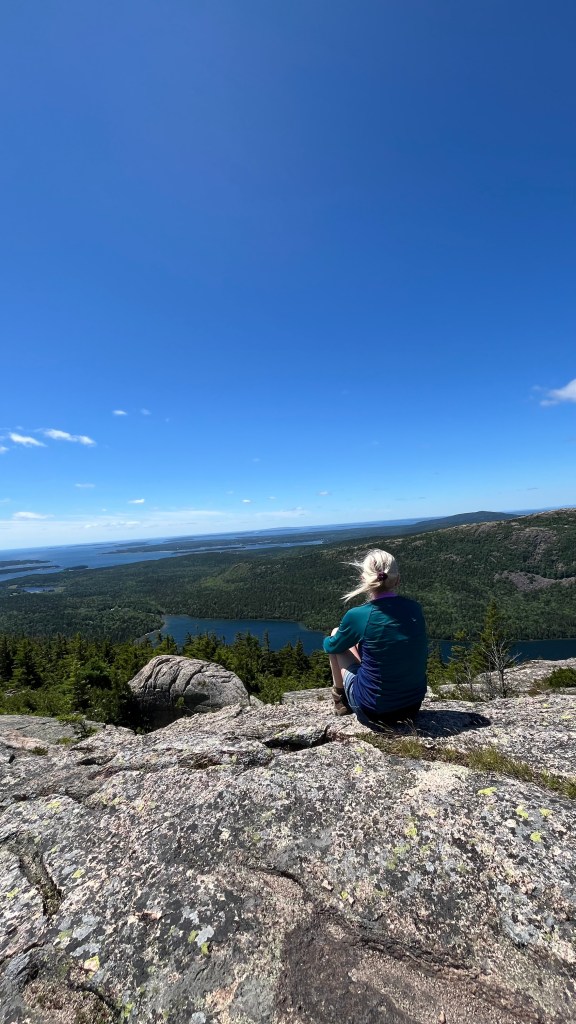
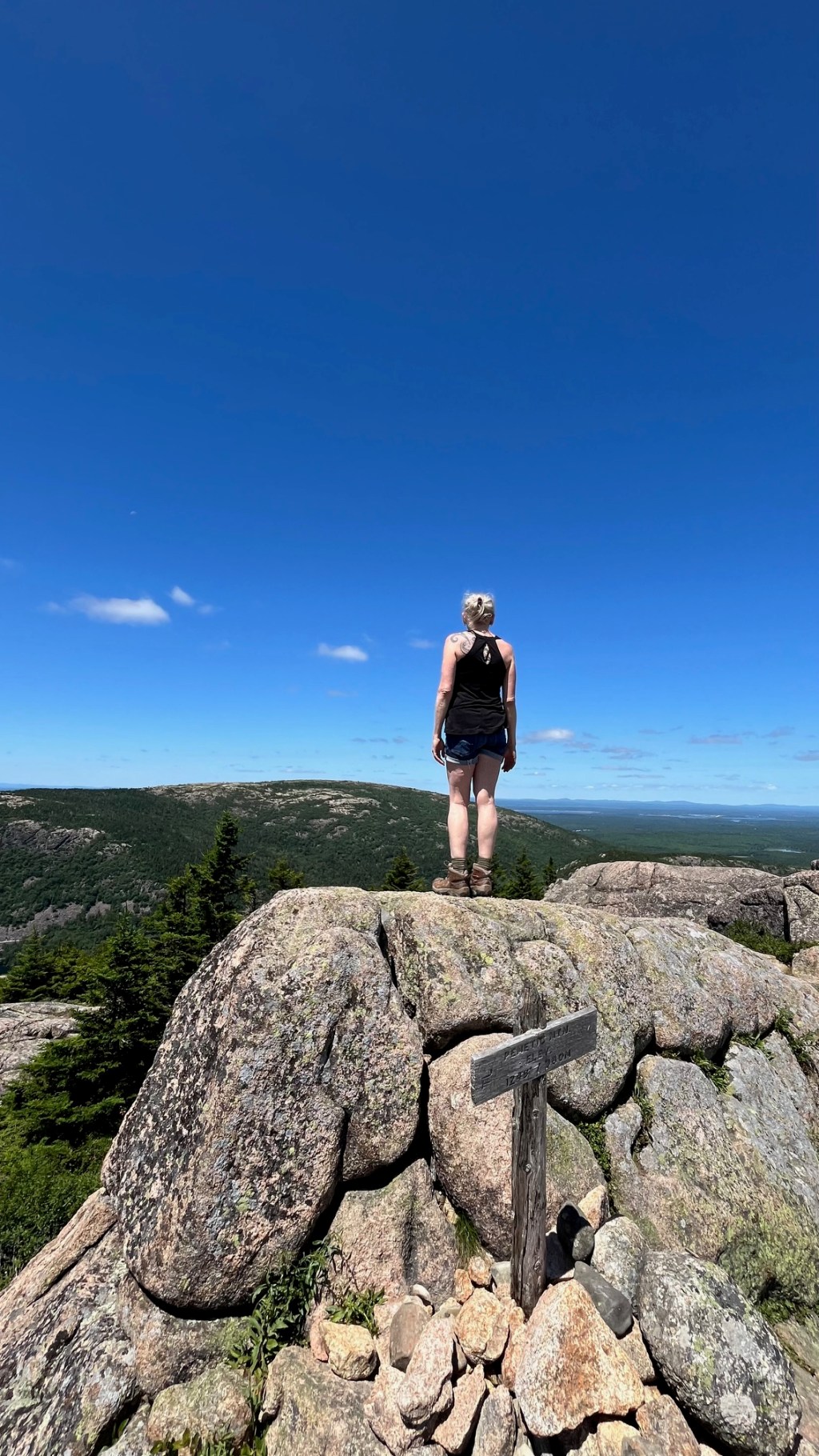
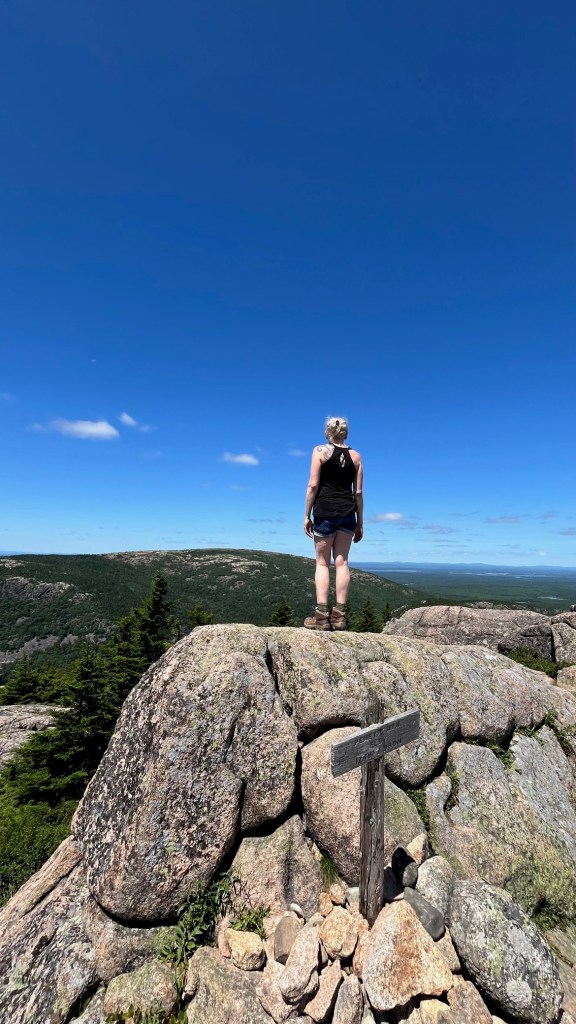
    Then we ventured up to Acadia National Park—so beautiful! One day, we hiked up a mountain over rock scrambles… it was steep but the views from the top were absolutely worth it. The trip down was just as epic—more scrambling and even some ladders into a ravine. So cool! 🔥

    We actually started the trip off strong, food-wise. I packed healthy travel snacks—nuts, grass-fed meat sticks, crunchy veggies, Applegate lunch meat, cheese, and Simple Mills crackers. We even brought food to cook over the campfire like burgers and shrimp—so good!

    As the week went on, we ate out more, which was fine—we tried to stick to less-processed, more home-style meals. But let’s be honest: there was ice cream… and s’mores… and then came the 16-hour drive home. That’s where it all went downhill. We hit a fast-food place late in the drive, and I ordered a burger, fries, and a Frosty. Yikes.

    The next day, I felt awful—fatigued, foggy, bloated, and just off. I’m normally up early and working out before the day starts, but instead, I went back to bed. My energy was zapped.

    Here’s the deal: ultra-processed foods are typically loaded with sugar, which feeds the bad bacteria in your gut and disrupts your microbiome. That imbalance can lead to inflammation throughout your body—including your brain. Many of these foods also contain refined grains that rapidly convert to sugar, compounding the problem. Add in the genetically modified corn and wheat (which are often sprayed with glyphosate, a pesticide originally developed as an antibiotic), and your gut flora takes a major hit.

    This isn’t how I normally feel—and that’s why I’m so grateful for my usual clean, whole-foods lifestyle. Today, I’m back to basics: clean water, no gluten or added sugar, minimal dairy, and lots of gut-loving nourishment. It makes such a difference.

    Processed food and excessive sugar don’t just mess with digestion—they can cause fatigue, depression, aches and pains, brain fog, poor sleep, and more. No thank you!

    Next vacation, I’ll still enjoy a few local treats—I’m all about balance, not deprivation—but in moderation. I want to keep traveling, trying new things, and living fully for the next 50 years! And to do that, I need to fuel my body in a way that supports my health and vitality.

    Nourishment is the highest form of self-care. Give your body—and your gut—a chance to thrive. Choose real, whole foods over processed ones. You’ll feel the difference. And when you feel better, you’ll naturally want to make other healthy lifestyle changes too. You can feel strong, vibrant, and full of energy—at any age.